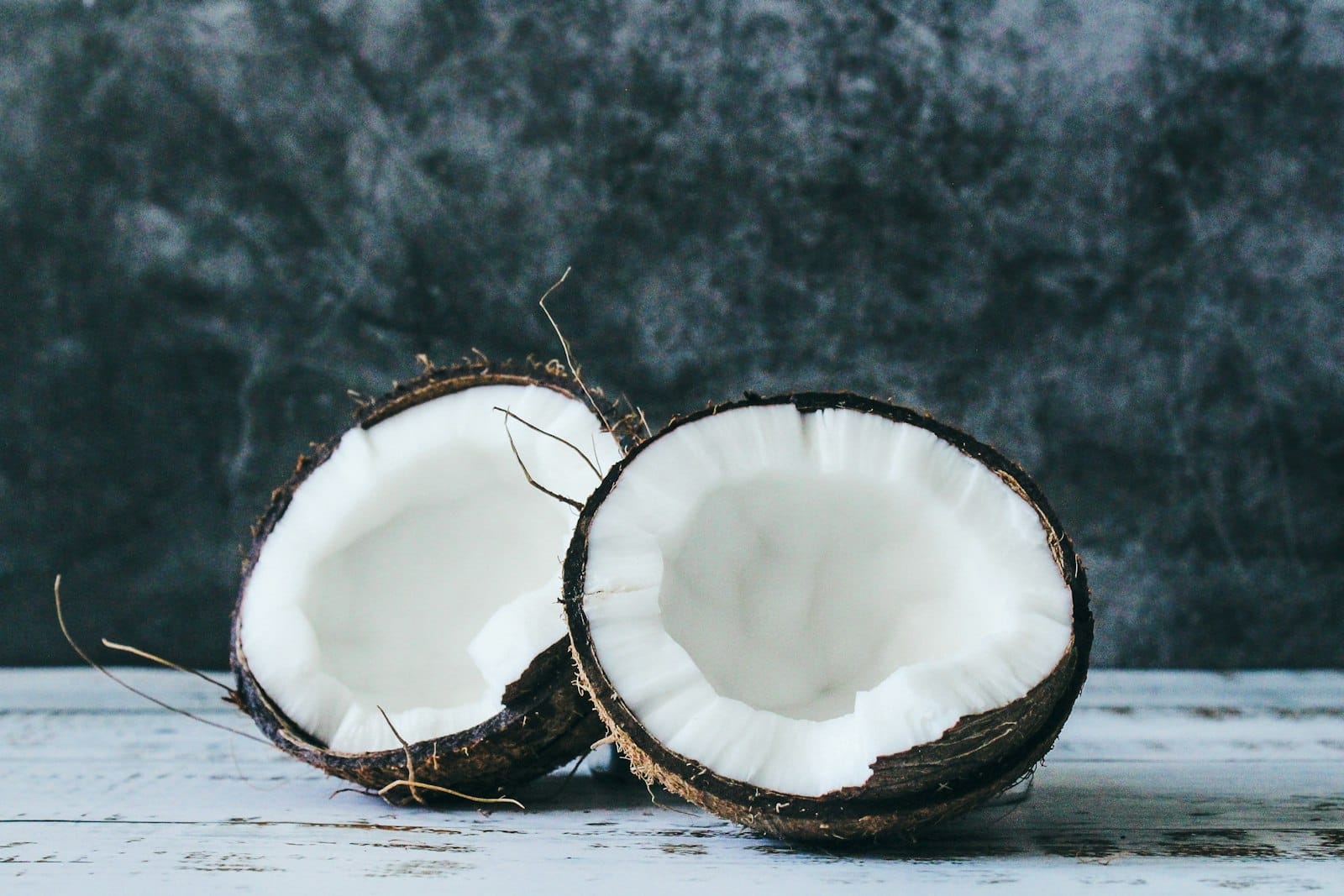
Few ingredients are as versatile as coconut. Oil, milk, water, flesh and flour all come from the same fruit, each with its own uses across sweet and savoury plant-based cooking.
This guide covers what each part of the coconut offers nutritionally, and how to use them well in the kitchen.
It is a genuinely remarkable fruit in that sense — very few other ingredients can claim to provide a drink, a milk, an oil, a flour and a snack all from the same source.
One fruit, five different ingredients
Coconut is unusual in how many distinct culinary products come from a single source.
| Form | What it is | Best for |
|---|---|---|
| Coconut water | Clear liquid from young coconuts | Hydration, smoothies |
| Coconut milk | Blended flesh and water | Curries, soups, desserts |
| Coconut oil | Extracted fat from the flesh | Cooking, baking, high-heat frying |
| Coconut flesh | The white meat of the coconut | Eating raw, shredding, desiccating |
| Coconut flour | Dried, ground flesh | Gluten-free baking |

The health benefits, by product
Coconut’s nutritional profile varies meaningfully depending on which form you are using.
According to Harvard’s Nutrition Source on coconut oil, coconut oil is high in saturated fat and best used in moderation, though its medium-chain triglycerides behave somewhat differently in the body to other saturated fats. Coconut flesh, meanwhile, contributes fibre and manganese, a mineral important for metabolism, while coconut water is prized mainly for its natural electrolytes and low calorie count.

Cooking with coconut milk
Coconut milk is a genuine workhorse in plant-based cooking, prized for the rich creaminess it brings to both sweet and savoury dishes.
In curries, it balances heat and adds body. In desserts, it stands in beautifully for dairy cream. And in smoothies, a splash adds a tropical richness that plain water or juice cannot match.

A note on sustainability
Coconut production has expanded significantly to meet global demand, which brings its own environmental and labour considerations worth being aware of.
Choosing brands that are transparent about sourcing, and organic or fair-trade certified where possible, is a small but meaningful way to support more responsible coconut production.
Using coconut oil sensibly
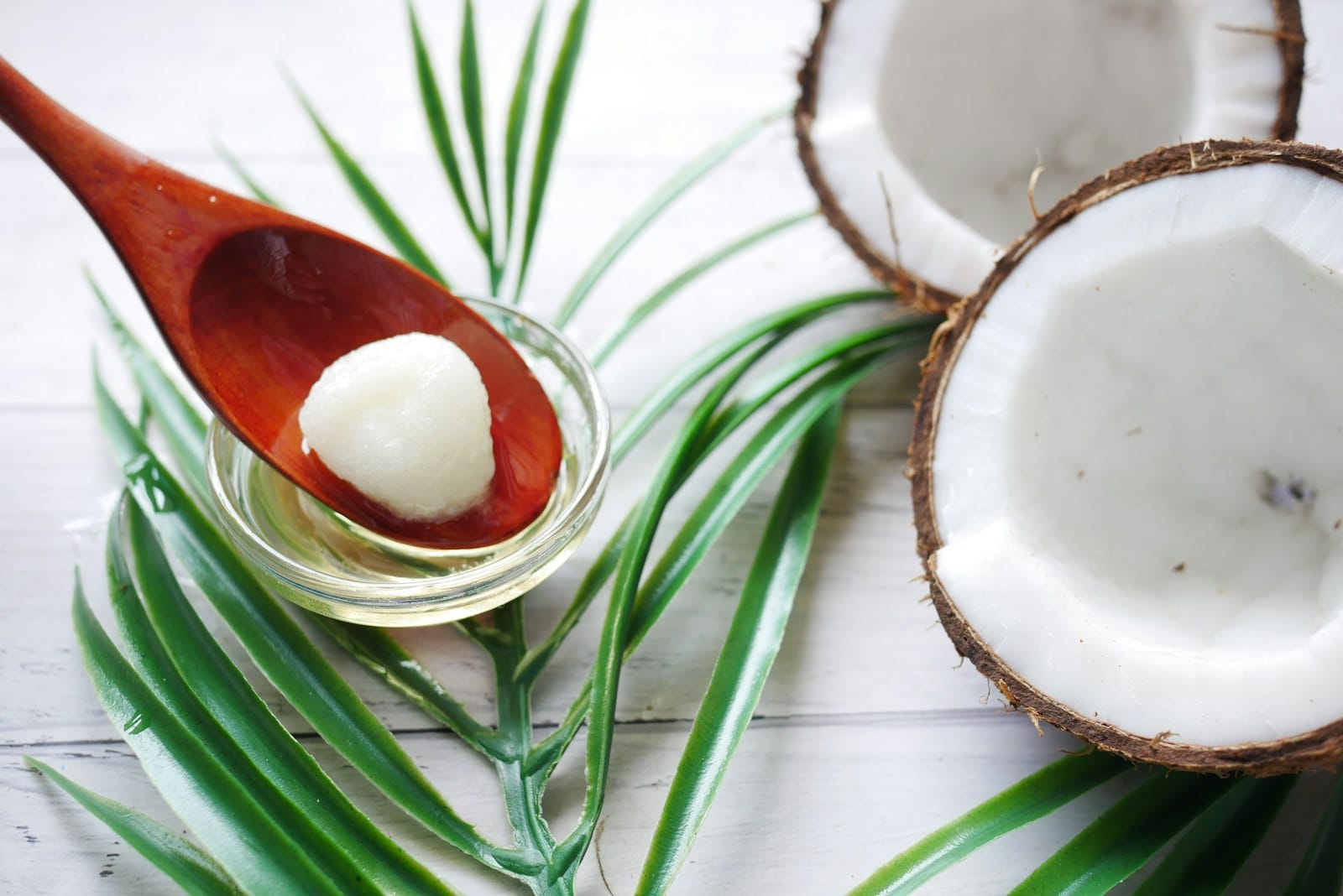
Coconut oil has a high smoke point, making it well suited to higher-heat cooking, and its solid-at-room-temperature texture makes it a popular dairy butter substitute in baking.
Given its saturated fat content, it is best used thoughtfully rather than as your everyday cooking oil — a good all-rounder like olive oil is a better default for most daily cooking, with coconut oil reserved for dishes where its flavour genuinely adds something.
Coconut in desserts
Beyond savoury cooking, coconut has a natural home in plant-based desserts, where its richness stands in beautifully for dairy cream.
Whipped coconut cream, chilled and beaten, produces a genuinely convincing topping for desserts, while coconut milk forms the base of countless dairy-free ice creams and puddings — proof that plant-based dessert never needed to feel like a compromise.
For an easy homemade version, chill a can of full-fat coconut milk overnight, then whip just the thickened cream that rises to the top with a little sweetener — a simple trick that produces genuinely impressive results.
Beyond the kitchen staples
Shredded and desiccated coconut both bring texture to baking, granola and toppings, while coconut flour offers a genuinely useful gluten-free baking option, though it behaves quite differently to wheat flour and typically needs more liquid in a recipe.
Coconut water, meanwhile, has become a popular natural sports drink alternative, valued for its electrolyte content and refreshing, mildly sweet taste.

Choosing good coconut milk
Not all canned coconut milk is created equal, and a few small details make a real difference to quality.
Look for a short ingredients list — ideally just coconut and water, without gums or stabilisers padding it out. Full-fat versions produce a richer, more authentic result in curries, while “light” coconut milk is simply diluted with more water, better suited to soups where a lighter consistency is preferred.
A curry staple worth understanding
Coconut milk in particular deserves a special mention for how central it is to so much beloved curry cooking, from Thai to South Indian and beyond.
Its natural richness balances spice beautifully, which is exactly why it shows up so often in the world’s great curry traditions.
Coconut at The Cardamom Pod
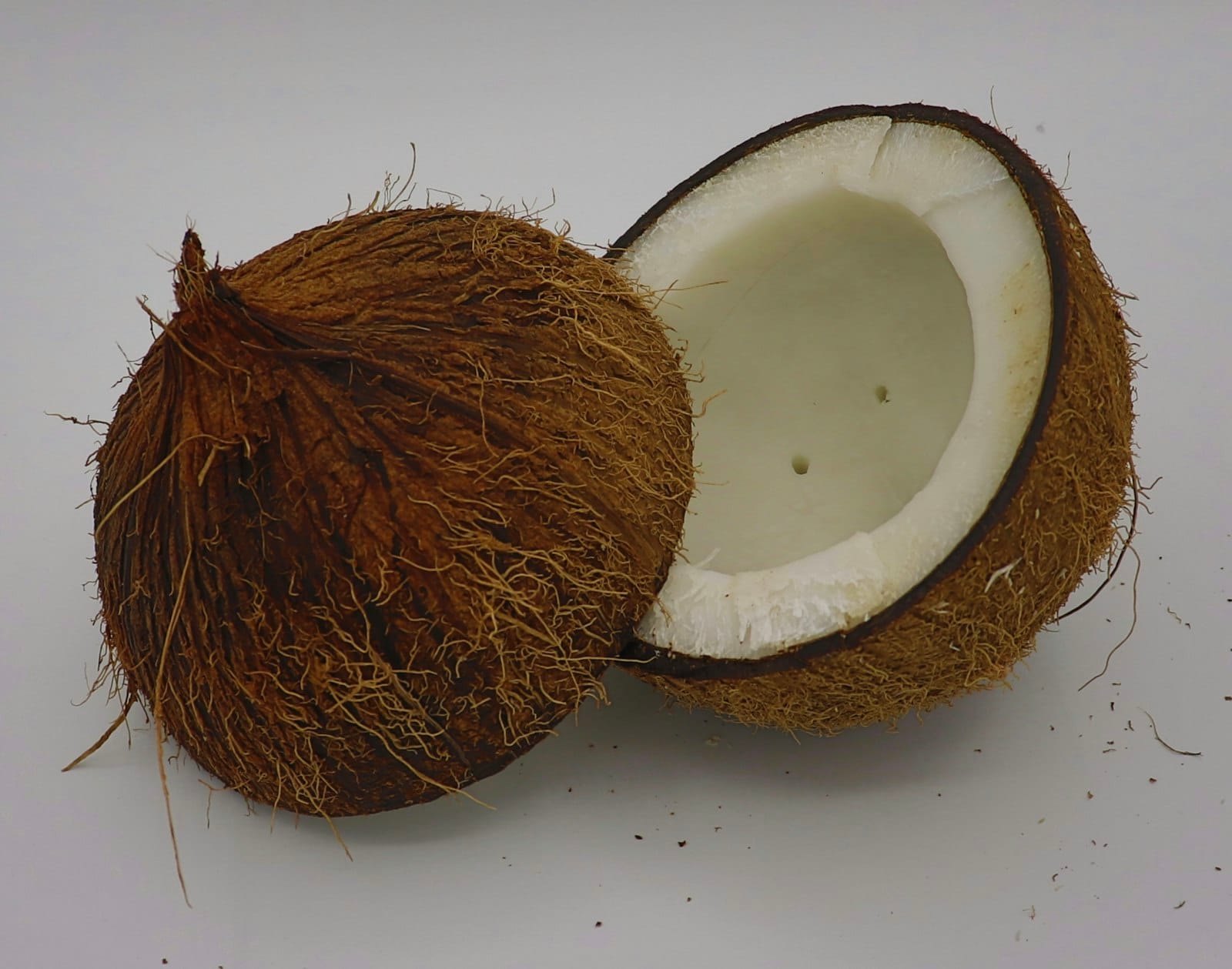
Coconut milk and cream feature in several of our curries and dishes, adding richness in keeping with the Indian culinary traditions that inspire our fully plant-based menu.
Browse our full plant-based menu, or explore our guide to plant-based milks compared for more on how coconut milk stacks up against other options.
A versatile ingredient worth keeping stocked
Between the milk, the oil, and the shredded flesh, coconut earns a genuinely permanent spot in a well-stocked plant-based pantry.
Few ingredients offer this much range across both sweet and savoury cooking, which is exactly why it shows up in cuisines right around the world.
Once you start noticing it, coconut turns out to be doing quiet work in a surprising number of your favourite dishes.
From a quick weeknight curry to a special-occasion dessert, it is genuinely hard to find an ingredient that pulls this much weight.
Keep a can of good coconut milk on hand, and you are never far from a genuinely satisfying meal.
It might just be the single most versatile item in a well-stocked plant-based pantry.
Few other single ingredients pull that much weight across both the savoury and sweet sides of a kitchen.
Frequently asked questions
What are the health benefits of coconut?
Coconut provides healthy fats, fibre, manganese and other minerals, with different parts of the coconut — oil, milk, water and flesh — offering slightly different nutritional profiles.
Is coconut oil healthy?
Coconut oil is high in saturated fat, so it is best used in moderation as part of a varied diet, though its medium-chain triglycerides are metabolised somewhat differently to other saturated fats.
What is the difference between coconut milk and coconut water?
Coconut water is the clear liquid inside young coconuts, low in calories and rich in electrolytes. Coconut milk is made by blending coconut flesh with water, producing a rich, creamy liquid used in cooking.
Can coconut milk replace dairy in recipes?
Yes — coconut milk works well in curries, soups, smoothies and desserts as a dairy-free alternative, though its distinct flavour is more noticeable than some other plant milks.
Does The Cardamom Pod use coconut?
Yes — coconut milk and cream feature in several of our curries and dishes, adding richness in keeping with the Indian culinary traditions that inspire our menu.
Keep exploring
For more, read our guides to plant-based milks compared, vegan kitchen staples, and cardamom benefits and uses.
Leave a Reply