
Plant-milk coffee has gone from a special request to the default order for a huge number of Gold Coast coffee drinkers. The good news: the quality has kept pace with the demand.
This guide covers what makes a great plant-milk coffee, how the different milks compare, and where to find a genuinely good one along the coast.
It was not always this good. Early plant-milk coffee had a reputation for splitting, thin foam and an odd aftertaste that put a lot of people off. Better milk formulations and more experienced baristas have largely solved those problems, to the point where many drinkers now prefer it outright.
Why oat milk became the coffee-shop favourite
Of all the plant milks, oat has become the clear favourite behind the espresso machine, and for good reason.
It steams to a silky, stable microfoam, has a naturally mild sweetness that complements coffee rather than fighting it, and rarely splits even in a strong, acidic espresso. For most people switching from dairy, it is the easiest, closest match.
Baristas have caught on too. Most specialty cafes now stock a barista-formulated oat milk specifically designed for steaming and foam stability, rather than the standard supermarket carton — a small detail that makes a noticeable difference in the final cup.

Comparing plant milks for coffee
Different plant milks behave quite differently once they hit hot espresso — here is how the main options compare.
| Milk | Texture & foam | Flavour | Best for |
|---|---|---|---|
| Oat | Creamy, stable microfoam | Mild, naturally sweet | Lattes, cappuccinos, everyday drinking |
| Soy | Good foam, steams well | Slightly beany, neutral | A close dairy alternative |
| Almond | Lighter, thinner foam | Nutty, subtly sweet | A lighter-bodied coffee |
| Coconut | Can split in strong espresso | Distinct, tropical | Iced coffee, milder brews |

Where to find great plant-milk coffee
A number of Gold Coast cafes have built a genuine reputation for their plant-milk coffee program.
Nomad is known for its oat milk lattes in a beautifully curated space, while Barefoot Barista in Palm Beach draws coffee lovers for its artisanal roasts and iced oat milk mocha. La Colombe Coffee Workshop is another strong choice for a expertly pulled plant-based flat white.
What these venues tend to have in common is treating plant milk as a genuine specialty rather than a workaround. The beans, the roast, and the milk are all chosen to work together, rather than plant milk being an afterthought bolted onto a dairy-first menu.

Plant-milk coffee at The Cardamom Pod
At The Cardamom Pod, plant milk is the standard, not the substitution. Our coffee program at The Brickworks in Southport is built around oat and soy milk, with a cow-milk option available if you prefer it.
It means you can order a latte, cappuccino or flat white without a second thought, made with the same care every time. Browse our full plant-based menu, or book a table.

Iced coffee, done plant-based
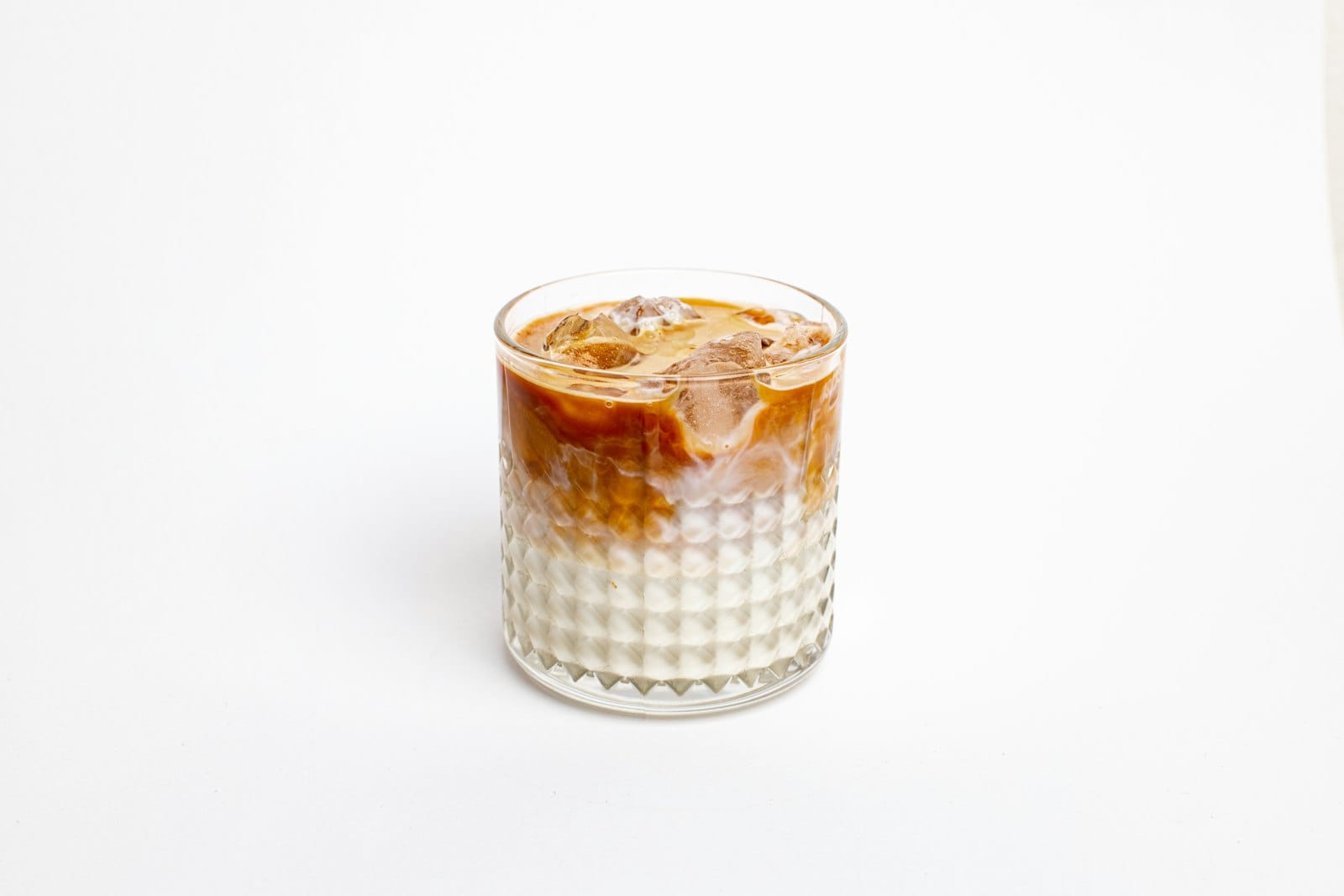
Plant milk works just as well cold as it does hot, which makes it an easy choice for iced coffee through the warmer months.
Oat milk in particular holds up nicely over ice without watering down too quickly, and its natural sweetness means many people find they need less added sugar. A cold brew with oat milk is a simple, reliable order almost anywhere on the coast.
A tip for ordering with confidence
Most Gold Coast cafes are now well used to plant-milk requests, so there is rarely any need to feel like a fuss.
If you are unsure which milk a venue stocks, it is always fine to simply ask — most baristas will happily talk you through the options and recommend what works best in their particular blend of beans.

Pairing plant milk with your coffee style
Different coffee styles suit different plant milks — a little matching goes a long way toward a better cup.
| Coffee style | Recommended milk | Why it works |
|---|---|---|
| Latte | Oat | Creamy body balances the espresso without overpowering it |
| Flat white | Oat or soy | Both hold a tight, velvety microfoam well |
| Cappuccino | Soy | Strong foam structure suits a thicker cap |
| Iced coffee | Oat or coconut | Both stay smooth and do not water down quickly |
None of these are hard rules — personal taste always wins in the end, and half the fun is finding your own favourite combination.
Making great plant-milk coffee at home
If you would rather perfect your own cup at home, a few small habits make a big difference.
Always shake or stir your plant milk before steaming, since separation is common and can affect texture. Steam gently and avoid overheating, as plant milks tend to break down faster than dairy at very high temperatures.
And do not be afraid to try a couple of different brands. Barista-formulated versions, designed specifically for steaming and foam, tend to perform noticeably better than a standard everyday carton, even from the same milk type.
Water quality and grind consistency matter just as much as the milk itself. If your home coffee has tasted a little flat since switching to plant milk, it is worth checking those fundamentals before assuming the milk is to blame.
The bigger picture
Plant-milk coffee is no longer a niche request — it is simply part of how a huge number of people drink their coffee, on the Gold Coast and well beyond it.
Whether you are vegan, lactose intolerant, or just prefer the taste, there has never been a better time to explore what is on offer. With so many quality options now available, finding a plant-milk coffee you genuinely love is easier than ever.
The next time you are ordering, treat it less as a substitution and more as a genuine choice — there is a good chance you will find a plant-milk coffee that beats your usual order altogether.
And if you are still finding your favourite, keep trying different venues and milks until something clicks — the range on offer along the Gold Coast makes that a genuinely enjoyable way to spend a few weekends.
Frequently asked questions
Where can I get good oat milk coffee on the Gold Coast?
Many Gold Coast cafes now pour excellent oat milk coffee, including The Cardamom Pod at The Brickworks in Southport and well-known specialty roasters further down the coast.
Does oat milk taste different in coffee?
Yes — oat milk has a naturally creamy texture and mild sweetness that many people find pairs particularly well with espresso, often steaming and micro-foaming similarly to dairy milk.
What plant milks work best in coffee?
Oat milk is the most popular for its creaminess and stable foam, but soy also steams well and holds foam nicely. Almond and coconut milk are lighter but can split in very hot or acidic coffee.
Is plant-milk coffee more expensive?
Many cafes charge a small surcharge for plant milk due to higher ingredient costs, though this varies by venue and is becoming less common as plant milk becomes standard.
Does The Cardamom Pod serve plant-milk coffee?
Yes — our coffee program is built around plant milk as standard, with a cow-milk option available if you prefer it.
Keep exploring
For more, read our guides to the best cafes in Southport, the best healthy cafes on the Gold Coast, and where to brunch in Southport.
Leave a Reply